April 11, 2026
The Yips and How To Overcome Them
Golf's most feared affliction isn't a technique problem. Karl Morris explains what the yips actually are — and the practical approach that creates lasting change

April 11, 2026
Golf's most feared affliction isn't a technique problem. Karl Morris explains what the yips actually are — and the practical approach that creates lasting change
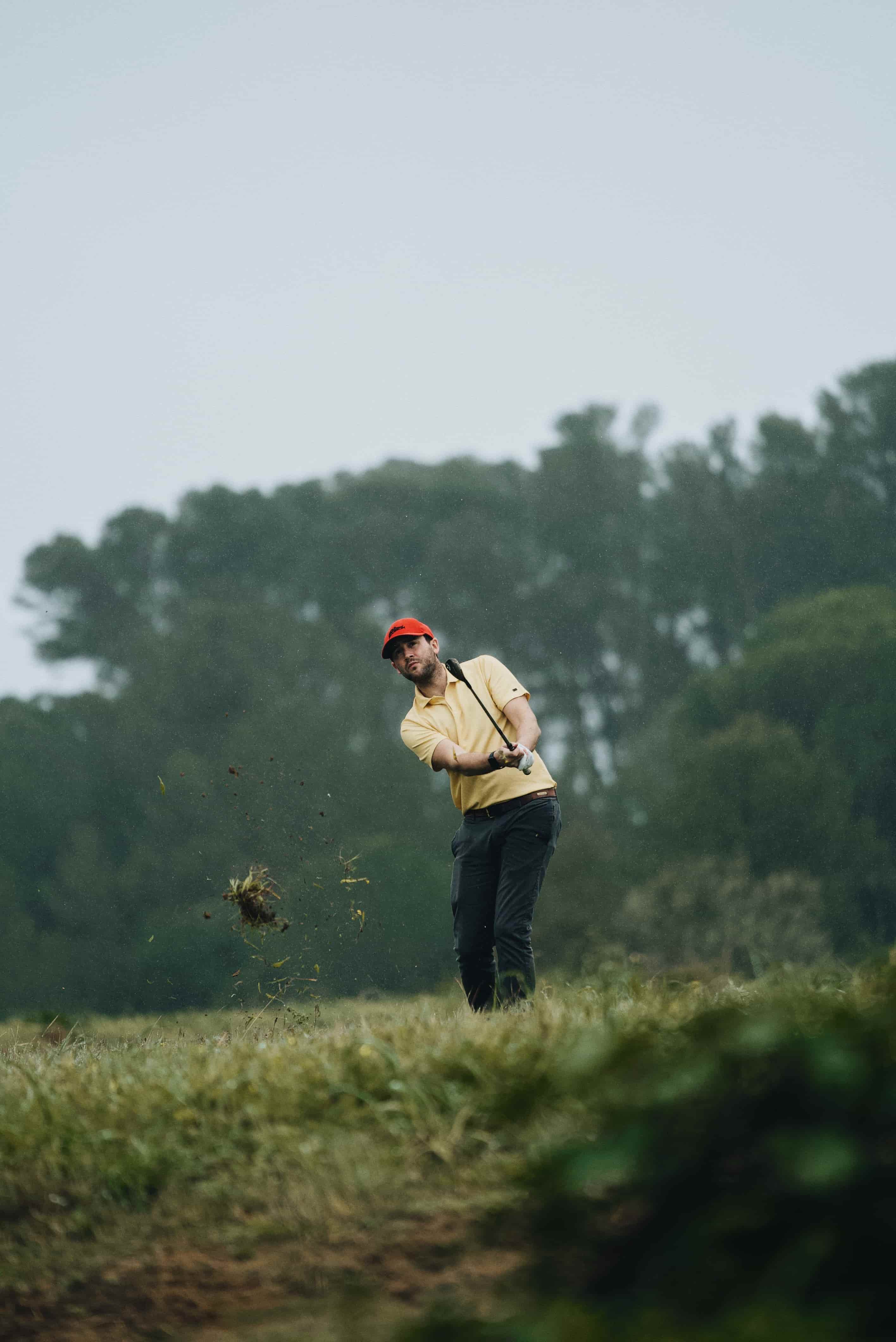
By Karl Morris — Performance coach to 6 Major Champions.
Golf's most feared affliction is widely misunderstood. The yips are not a technical problem, and you cannot fix them with technique. Here is what is actually going on, and what you can do about it.
Let's start with something honest.
When golfers first started talking to me about the yips — those involuntary twitches, freezes and misfires that can make a two-foot putt feel like defusing a bomb — the conventional wisdom was bleak. If you wanted advice on curing the yips, you could expect your club professional to suggest taking a two-week break from the game, before giving up completely. The golfing mind and its effect on performance remained largely a mystery.
We have come a long way since then. Not because anyone has invented a magic cure, but because we now understand far more about what the yips actually are. And that understanding — that shift from mystification to genuine insight — is where real progress begins.
Ask most golfers to explain the yips and they will talk about the putting stroke going wrong, or the chipping action seizing up. They describe it in technical terms — a breakdown of mechanics, a loss of coordination. The instinctive response is to then look for a technical fix: a different grip, a different method, a new putter. And for most sufferers, none of it works.
That is because the yips are not primarily a technical problem.
To understand what they are, you first need to understand something about how the brain controls movement. Golf swings — or any motor skill — are not stored in the muscles. Muscles have no neurological activity and therefore no capacity to remember anything. The motion of the golf swing is controlled by neural maps in the brain: essentially connections that direct our muscles in what we want to achieve.
The critical factor in building and maintaining effective neural maps is not what we practise, but how we practise — and most importantly, where we place our attention. This is research that neuroscientist Dr Gabriele Wulf has dedicated her academic life to, introducing the concepts of Internal and External Focus of Attention.
If you are focusing internally, your attention is on your body — telling yourself how to move through space. If your attention is external, it is on the effect of the movement: the motion of the club, the flight of the ball, the target.
Dr Wulf's research showed something startling: external focus cues increased skill acquisition by approximately 33%. And the part of her research that matters most for yips sufferers is this — an internal focus fared no better in learning a motor skill than having no instruction at all. Yet for most golfers in the grip of the yips, the response is to become even more internally focused: watching the hands, monitoring the stroke, trying to control every millimetre of movement.
That is precisely the wrong direction.
The brain has two distinct regions at work when you play golf. The prefrontal cortex is the conscious, analytical part — it thinks, plans and analyses. It is the part you use when you work on a new swing move on the range. The cerebellum is a movement expert: it uses information from your senses to coordinate and regulate motor movements, compensating naturally when things are slightly out of position.
Fluent, free golf is played when the cerebellum is doing its job — when the body can organise naturally around a clear intention without being second-guessed by the conscious mind. The problem is that when the prefrontal cortex is firing loudly, its noise drowns out the cerebellum's signals. The very part of the brain that would otherwise produce a smooth, coordinated movement is being overridden by the part trying desperately to control it.
This is what the yips feel like from the inside. A simple movement that you have made thousands of times is suddenly operating under intense analytical scrutiny. The moment you are over that short putt with everything riding on it, the prefrontal cortex goes into overdrive — and the quiet, competent cerebellum can no longer be heard.
Adding to this is the effect of tension. When we begin to struggle with our game, there is an increase in brainwave frequency. As our mind gets busy, the clear and simple messages from brain to body — which had been flowing freely — start to get interfered with. Confusion leads to tightness. Rhythm and sequencing evaporate.
There is a famous Tai Chi saying: tense muscles are weak muscles — and they forget. No wonder the yips feel so utterly baffling. You know perfectly well how to make that stroke. You've done it a thousand times. But the harder you try to find it, the more it disappears.
One reason the yips take such a powerful hold is the language we use when we try to fix them.
In everyday life, we are conditioned to give and receive instructions in words — either spoken or written. So inevitably, when we stand over a golf ball, that's what we do. We tell ourselves: keep the blade square. Don't twitch. Slow the hands down. Hold it through impact.
There is just one problem. The part of the brain that understands and processes verbal instruction is nowhere near the part that deals with movement and motor skills. The two parts are speaking different languages. As a result, a verbal command cannot be converted into physical movement in any reliable way. This is one reason why so many well-intentioned swing thoughts simply fail to translate to the course — and why, for a golfer in the grip of the yips, an ever-longer list of technical reminders tends to make things worse rather than better.
While the brain's motor-skill circuitry cannot interpret words effectively, it is brilliant at responding to pictures. Once you give yourself an image of your intention — as opposed to a phrase or sentence describing it — you are giving the job of executing the task to the appropriate part of your brain. The movement patterns we need to perform any motor skill — balance, coordination, sequencing, natural power flow — can be released and utilised.
A picture also gives your brain something to react to. Think of Ben Stokes at the crease, or Emma Raducanu returning a serve — with the ball arriving at speed, their task is created for them, and the response is instinctive. With a vivid image of the shot you want to hit — really seeing it in colour — you can start to create that same reactive quality in golf. Not a technical instruction, but a genuine picture that the body can respond to naturally.

The yips thrive in a climate of fixing. The more urgently you try to correct the problem, the more attention you pour onto the afflicted movement, and the deeper the groove of dysfunction becomes.
There is an alternative approach — one that sounds almost too simple, but that has helped golfers break free from stubborn movement patterns that nothing else would shift. I call it Awareness Mode.
The idea is to go into your next practice session without working on anything. Instead of influencing, correcting or fixing, you simply observe. Place your attention on the clubface as you swing — not to affect it, but just to notice what it is doing. Are you sensing it open or closed? Can you begin to feel the relationship between what the club is doing and where the ball is going?
This matters because the vast majority of golfers caught in repetitive movement problems are, at root, lacking awareness of what is actually happening during their swing. We become attached to working on one specific thing — which renders us blind to everything else. It's like trying to drive a car while placing all your attention on the speedometer. How can you make effective changes when you have no proper understanding of what you are actually doing?
In Awareness Mode, after a few shots something starts to shift. Feel for the clubface begins to grow. You start to sense connections you had lost. You begin to learn, in a quiet and unforced way, to coach yourself.
After twenty or so shots in this observational state, try something more specific: hit five balls where you consciously sense you are closing the face, then five where you sense you are opening it. How does that feeling tally with where the ball went? You are beginning to rebuild the connection between felt action and result that the yips had severed.
Blend this with the five-five-five rule: five shots very slowly, five at half speed, five at normal pace. Martial arts have used slow-motion practice for centuries to develop effective, ingrained movement. It works.
One of the defining features of the yips is the internal chatterbox that accompanies every shot. As you stand over the ball, a stream of anxious thoughts floods in — memories of previous failures, predictions of what is about to go wrong, instructions and counter-instructions all firing simultaneously. This is what eastern disciplines call the 'monkey mind', leaping from thought to thought with no rest.
The instinct is to try to silence this chatter. But this is both futile and counterproductive. You cannot switch the brain off; trying to force it into silence only creates more noise.
What you can do instead is shift from the thinking mind to the observing mind. The thinking mind is the chattering one, sending through that relentless stream of observations, fears and instructions. The observing mind simply makes itself aware of what is going on — it notices a thought, lets it pass, and returns its focus to the task at hand.
Think of those intrusive thoughts as clouds blowing through. You experience the cloud, you accept it, you let it move on, and you refocus. The thought no longer has power over you simply because you are no longer wrestling with it.
Playing golf in this more observational state calms the mind because you are no longer at the mercy of the brain's chatter. It keeps you in the present moment, which is the only place from which you can actually play a golf shot. And it gives you a far clearer awareness of what is really going on — both mentally and technically.
Here is a simple way to practise this state. Take a single ball to the putting green. Set up to a putt. Look at the ball — the colours and shapes on the cover. Hit the ball and keep your eyes pinned on the spot where it was: you'll see a dark, circular shadow — a retinal afterimage. Hit five putts, each time finding that image. This forces you into the observational state of mind. Notice how it doesn't just keep your head still. It keeps your mind still as well.
The yips rarely exist in isolation. Beneath the technical disruption, there is almost always a layer of fear — fear of failure, fear of embarrassment, fear of what a missed shot means about you as a golfer or even as a person.
Arguably like no other sport, golf invites us to tie our performance to our sense of self-worth. It is an individual game — there is no one else to rely on or to blame — and it deals in deeply personal qualities: courage, tenacity, nerve. When those feel like they are being publicly tested on every short putt, the anxiety is entirely understandable.
But that anxiety is also self-fulfilling. Fear, worry, anxiety — these are the brain's way of warning you and protecting you from an outcome it is treating as dangerous. The more you treat a short putt as a threat, the more urgently the brain tries to help — and the louder the prefrontal cortex fires, drowning out the cerebellum that would otherwise make the stroke seamlessly.
The way to diffuse this is not to try to stop the fear. It is to put the feared outcome on the table. You might miss this putt. You might flinch on this chip. You might have a terrible day. Until you genuinely make peace with that possibility — truly make peace with it, not just say the words — nothing will fully protect you from those feelings and the poor performance they create.
Stable confidence is not found in believing you will execute a good shot. It is found in knowing you can accept and deal with the result, whatever it is. That shift — from needing to succeed to being genuinely willing to accept any outcome — changes the relationship between your brain and the shot entirely. The threat diminishes. The prefrontal cortex quietens. And the cerebellum, the movement expert, can finally do its job.
There is one more piece of the puzzle worth examining, because it is both completely understandable and almost universally counterproductive: the instinct to try harder.
When the yips arrive, the natural response is to bear down — to concentrate more intensely, to approach every putt with grim, focused determination. This feels like the right thing to do. It feels like commitment.
But just 10% of a round of golf is spent actually executing shots. The other 90% is something else. When golfers withdraw into a cocoon of intense concentration for the full duration of a round, they are creating enormous intensity in all the wrong places — and exhausting themselves before the moments that actually matter.
More problematically, trying harder often means focusing on a distant or future outcome. Standing over a short putt thinking I cannot miss this is not focus on the putt itself — it is focus on a result that has not yet happened, three seconds away. That kind of effort actively ruins the focus it is trying to create.
The best caddies on the world's professional tours are great distractors. They stop the intensity between shots by talking about anything other than golf. They help their player tune out completely — and then tune back in cleanly, in the moments immediately before the shot. That cyclical pattern of switching off and switching on is far more effective than maintaining a sustained, draining level of concentration.
Accept that it is perfectly possible to talk, laugh, be wide-open to the world between shots — and still give the shot itself your full focus and attention. Golfers from Lee Trevino to Andrew 'Beef' Johnston have made a virtue of it. Rationing your effort, rather than burning it all the time, is not a lack of commitment. It is wisdom.
The yips, understood properly, are not a mysterious affliction that visits certain unfortunate golfers and refuses to leave. They are a predictable outcome of a set of conditions: too much internal focus, too much analytical thinking, too much tension, too much fear attached to the outcome, and an attention that has become disconnected from the natural feel of the movement.
Work on any one of those conditions and things will start to shift. Work on several of them together, with patience and without the expectation of instant results, and the shift can be profound.
Shift your attention outward — onto the target, the club, the shot shape — rather than inward onto mechanics and movement. Use pictures rather than words to set up your intentions. Practise in Awareness Mode, observing rather than fixing. Develop your ability to play with an observing mind rather than a thinking one. Make genuine peace with the possibility of failure. And ration your effort, so that when you arrive at the shot, you have something real to give it.
None of this is quick. None of it is a single-session cure. But it is grounded in how the brain actually works — and that gives it something that technical adjustments usually lack: the possibility of lasting change.
If you want to go deeper on this, the Combating the Yips programme in Mind Caddie takes you through six structured sessions with Karl, working through the principles above in sequence — from understanding what's happening in the brain, to rebuilding feel, to managing the fear that keeps the cycle alive. It is the most complete approach to the yips Karl has developed in three decades of performance coaching.
Explore Combating the Yips in the Mind Caddie app.
Karl Morris is a performance coach who has worked with six Major Champions and more than 100 tour professionals. The Mind Caddie app brings his coaching to golfers of every level.
The Mind Caddie app puts Karl's complete framework into structured audio programmes, daily lessons, and AI coaching. Built for the golfer who knows their game is being held back by what's happening between the ears, not what's happening at the range.
No commitment. Money-back guarantee if you don't see improvement within 3 months.

.png)